

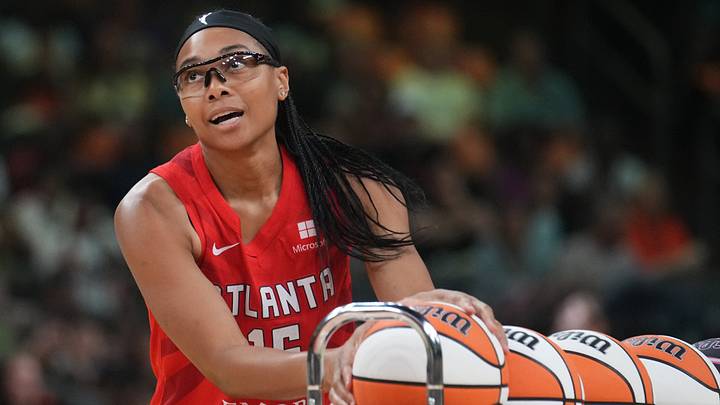
The results of this year's period of All-Star voting were surprising in some ways. For example, the Atlanta Dream ended up without a single player named to a starting roster, which is a pretty big deal when you consider how many of the team's players (including Rhyne Howard, Allisha Gray, and Angel Reese) are playing this season.
A lot of focus has been paid to the fan portion of All-Star voting, and for good reason. The fan vote accounts for 50% of the total that a player receives, which means that supporters of teams can tip the scales heavily in favor of their favorite athletes. This was in part how the Indiana Fever managed to end up with three players (Aliyah Boston, Caitlin Clark, and Kelsey Mitchell) named as starters this season, a franchise first.
But the rest of the vote — 25% of which comes from coaches, and another 25% of which comes from the players themselves — is also important. Per the AP, more than half of the 180 players in the WNBA didn't turn in their All-Star ballots this season, which could explain some of the more confusing discrepancies that have been pointed out.
A source with knowledge of the voting debacle spoke with a representative of the Los Angeles Sparks, who noted that though players were sent ballots by email, not everyone received them. The team explained, "Some players indicated that they didn’t receive the email or weren’t aware of it until after the voting period had closed. That’s something we take responsibility for as an organization, and we’ll have a more robust process going forward."
The AP also spoke to the New York Liberty's Sabrina Ionescu, who told the news organization that the team has always made sure everyone receives their ballots and turns them in.
The organization added that the path toward voting is similar to how members of the media vote: players receive a link to a ballot and are provided with an individual username and password. They cast their frontcourt and backcourt votes on a secure site. The AP noted that players have historically shared they either vote for everyone on their team or they vote for their friends and/or former college teammates — something that isn't too surprising given that much of the All-Star race amounts to a popularity contest in the first place.
Next year the voting system for players will likely be more intentional, but this year's debacle could have been avoided entirely if the right steps were taken.
 Add us as a preferred source on Google