

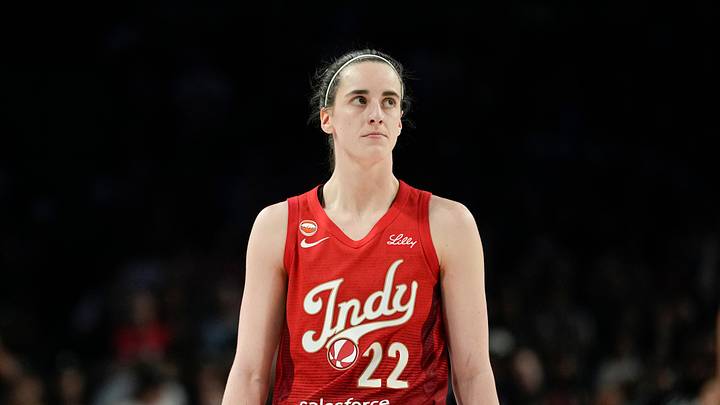
The 2026 WNBA season didn't go the way the Indiana Fever wanted it to. The team exited the WNBA playoffs in the first round after they lost their best-of-three series to the Las Vegas Aces. Their exit spurred a lot of tough conversations in rapid succession. Most notably, Kelsey Mitchell hinted at leaving, and multiple players past and present raised concerns about the behavior of some fans.
Culture and personnel problems are big ones for any sports team, but the Fever also have another factor that will dramatically shape the 2027 season: the team doesn't seem to have the cap space they need to keep their core together. Caitlin Clark will be due for a contract extension that will likely be formidable under the league's Exceptional Performance on Initial Contract (or EPIC) provision that could get her up to $1.3 million; Mitchell will be an unrestricted free agent; Aliyah Boston is on a supermax contract until 2029 — and there will still be 9 other players to worry about.
The team's salary cap can increase up to $7.91 million, so that will help — to a point. Boston will get her nearly $1.6 million, and Clark's salary will hit at least $596,597. Several players are set to make hundreds of thousands of dollars: Lexie Hull and Monique Billings will be paid $800,000, and the team is on the hook for Makayla Timpson's $305,250 contract, Damiris Dantas' $288,600 deal, and Raven Johnson's $300,698.
That leaves the team with around $3.5 million — and, presumably, Clark will eat up some of that. The Fever could try trading Hull or Billings (or both), but fans might not like it.
Fever fans don't have a super strong relationship with Billings yet, since she's only played one season in Indiana, but she was a consistent performer all season. More importantly, she's also played throughout the WNBA; this makes her marketable to other teams, but also indicates to the Fever (and the team's fans) that she has the ability to do pretty much anything that is asked of her. That's an underrated skill to have on any team, but especially to have on a team that faces the unique challenges so often posed to Indiana.
Trading Hull could prove to be a problem for two reasons: she's not as marketable to other teams as Billings is (Hull was drafted by Indiana as the No. 6 overall pick in 2022 and has only played for the team so far), and her contract is pretty high. It could be tough for the team to convince others to take a chance on a player who hasn't demonstrated ability outside of one team, and it could be even more difficult to appease fans who consider Hull part of the Fever's identity.
But the Fever face more than money problems. There's been a simmering culture issue that's followed the team the last three seasons. The Fever gets outsized attention because of the enormous interest in Clark, and a lot of the people posing as fans often seem more inclined to stir the pot and cause problems, online and off. It can be difficult to determine who the problems are. The Fever could benefit enormously from firmly landing on a team culture and identity, sticking to that, and clearly communicating it the way other teams (the Golden State Valkyries, for example) have done.
Money and culture aside, there's even more: there's no hiding that the Fever has been chasing a very unique, specific kind of success they haven't managed to attain yet. Clark entered the WNBA to a lot of hype and fanfare, and she's often demonstrated plenty of potential to live up to that and more. But the Fever is more than one player, and Clark has areas in which she needs to grow. The team needs a strong veteran presence who can dominate both ends of the floor, influence the younger players, and instill the values and culture the team deems important, and do all of this while somehow tuning out the tremendous amount of noise that's just part of playing at Indiana.
And, of course, that's where things come full circle: veterans are expensive, and the leadership the Fever could most benefit from will cost a pretty penny.
 Add us as a preferred source on Google