

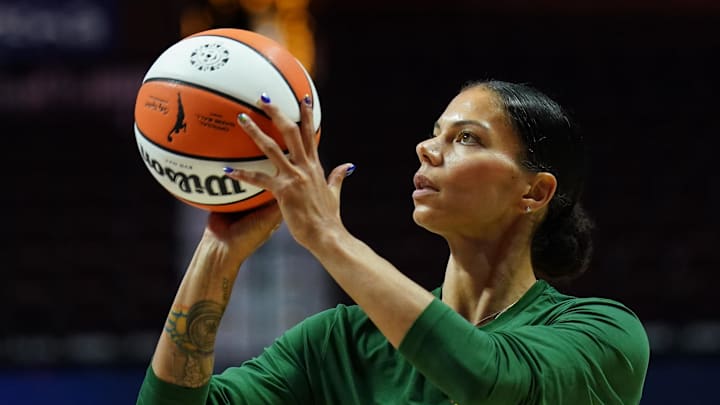
The WNBA sent over a new Collective Bargaining Agreement (CBA) proposal to the players' union Sunday evening that appeared to inch closer to solving the disagreements between the two groups, but fans shouldn't get too excited just yet. As Alysha Clark, who ended the 2025 season with the Washington Mystics, told Aces reporter Callie Fin, a strike is still very much a possibility.
On Monday Fin shared via social media, "Reading/watching everything that came out of Unrivaled media today... it sounds like a strike is essentially off the table for WNBA players in these CBA negotiations."
Clark responded on Threads. "Hey Callie, this is not accurate," she wrote back. "A strike is very much still on the table."
Clark also added that though some players may express their own opinions about whether there will be a strike, and they might even share that they do or do not support striking, is a "very different" conversation than one about the strike being "taken off the table." She added that the players have been preparing for the possibility of a strike if one should be called.
The latest CBA update would benefit new players
The WNBA sent the league's latest proposal to the players on Sunday evening. The league's newest offer includes a benefit that would impact newcomers to the WNBA the most.
The league has proposed giving players who are on rookie contracts and who make First or Second Team-All WNBA will have the chance to earn the maximum salary during their fourth season. If approved as part of a new CBA, this would give Aliyah Boston the opportunity to sign a maximum contract this year, while Caitlin Clark could do so in 2027, and Paige Bueckers could follow suit in 2028
The proposed first year salary cap is $5.7 million, which is a big increase of 280% from the 2025 season and the January 2020 CBA. By the end of the deal, the team salary cap would be $8.6 million, and maximum salaries in the WNBA would increase by $1 million. The current maximum salary is $249,000, and that number would ultimately jump up to $1.3 million.
The league also appeared to offer some concessions in terms of revenue sharing, which has been a major sticking point for both parties — but the offer is not in line with what the players have requested. The league has offered to give the players more than 70% of net revenue, and that number would increase over the lifetime of the agreement.
 Add us as a preferred source on Google