

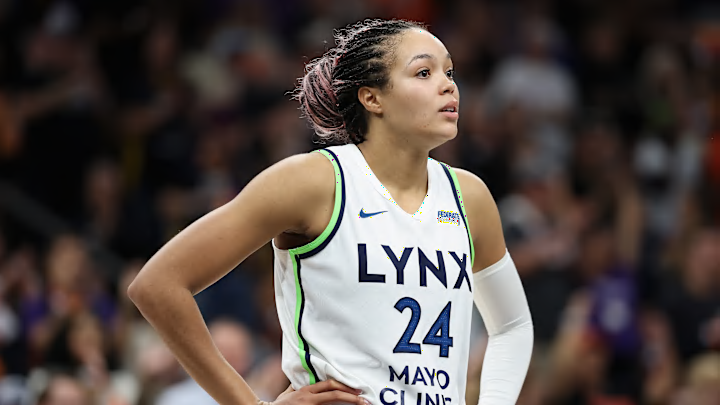
The WNBA and the players in the league have nearly made it past a second CBA negotiations deadline with seemingly no deal in sight. After both parties failed to come to an agreement at the end of October, the league proposed a second deadline of November 30, which the players accepted — but it appears little as shifted during that time.
This isn't the first time CBA negotiations have dragged on further than everyone involved would like, but this time around there's a lot more on the line. Since the last CBA was negotiated in 2020, two new leagues — Unrivaled and the recently announced Project B — have materialized, each with the potential to disrupt the WNBA (or address the needs of players) if protracted negotiations continue.
Players have also been increasingly vocal about their frustrations with how negotiations have taken place, and some fans have grown concerned we could collectively enter 2026 with a lockout on the horizon. It's not clear how a lockout would impact everyone involved (some players, especially those signed to offseason contracts overseas and those playing in Unrivaled beginning in January) might be fine and financially comfortable, but others who rely more heavily on only their WNBA paycheck could find themselves in a tight spot.
Continuing much further without a new CBA also threatens two expansion teams and the athletes who hope to be drafted in 2026. Both the Portland Fire and the Toronto Tempo need to hold expansion drafts, something they'd ideally be able to do before free agency begins in January.
A lack of a CBA threatens more than the 2026 season
The lingering questions surrounding the CBA do little to help the WNBA when it comes to Project B, a new 5x5 league that's signed a host of players including Kelsey Mitchell, Sophie Cunningham, Alyssa Thomas, and Nneka Ogwumike. The exact details of the league haven't been fully shared publicly, but its organizers have not shied away from the possibility that Project B could encroach on what's largely been considered the WNBA's territory since the league's inception in 1996.
It's unclear if there will be a third contract extension, and presumably all involved parties are working Sunday to come to a resolution that works for everyone. Before the 2020 deal was struck, the involved parties initially agreed to a 60-day extension and then a two-week extension, which brought the conversation into January — but ultimately, that's what it took to make it all work.
 Add us as a preferred source on Google