

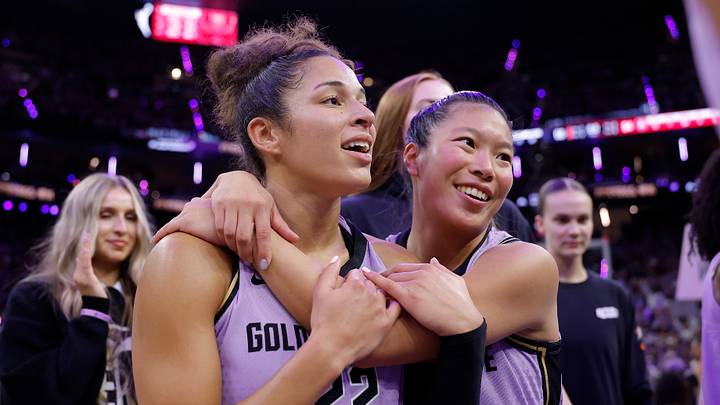
The WNBA Finals are the pinnacle of women's basketball. This is the elite of the elite. Naturally, fans expect two franchises to go to war in an explosive offensive masterclass. This isn't always the case, and that doesn't mean the series hasn't lived up to the hype. Both the Golden State Valkyries and Atlanta Dream are exceptional defensive teams; this championship will be decided on resilience, not outrageous point totals -- and that should be celebrated.
Game 1 of the WBNA Finals ended with the Valkyries claiming a 68-64 victory over the Dream. This is just the first game in the last 10 Finals matchups in which the combined points total remained under 140 (132). In fact, 7 of the last 10 Finals games accumulated 150+ points.
Admit it, as a society, we are cynics. The immediate reaction to a low-scoring game of this nature is to criticise the teams. Offensively, the Valkyries and the Dream weren't good enough; we expected better. Is this really the case? Or are we witnessing two excellent defensive outfits that should be praised for the internal and external problems they can cause the opposition?
Fans should embrace the defense-first mentality
It is no coincidence that Golden State and Atalanta held each other to under 70 points. The Valkyries (99.3) and the Dream (103.5) held the top two spots for defensive rating throughout the regular season. Natalie Nakase and Karl Smesko have created stable systems, so their teams are resilient but still put on a show for loyal spectators.
Atlanta is the perfect example of a captivating defensive team. The Dream's roster boasts Angel Reese, Rhyne Howard, and Jordin Canada -- one is the Defensive Player of the Year, the other two are All-Defensive stars. For unfamiliar fans, this might suggest the team suffocates opponents' offense, making games boring to watch. Wrong. Atlanta embraces chaos by putting immense pressure on the ball and forcing teams into turnovers with a high-energy approach.
On the other hand, Golden State has a coach who intensely studies matchups and prioritises winning over loyalty to her players. Nakase's versatile roster allows her to minimise an opponent's production while getting the best out of her stars.
In the modern-day game, coaches don't get enough credit for their tactical brilliance, and fans don't appreciate what they are watching. In the opening stages of Game 1, Karl Smesko brilliantly created a blueprint that his players executed to perfection. Atlanta silenced the chamber of noise that the 'Ballhalla' crowd can create, causing the Valkyries' stars to underperform.
And, Natalie Nakase responded with in-game adjustments that turned the ride for Golden State. Nakase's change unleashed the two-way brilliance of Gabby Williams, and without that tactical tweak, the Dream would surely have clinched a pivotal road victory in the WNBA Finals.
It's easy to brand the WNBA Finals as a disappointment, but that is far from the case. Frankly, this series will remain a low-scoring affair; however, the contests are as energetic and fierce as ever. Fans are witnessing a chess match between two elite defensive teams, each led by an exceptional coach. This matchup should be celebrated, not criticised.
 Add us as a preferred source on Google