

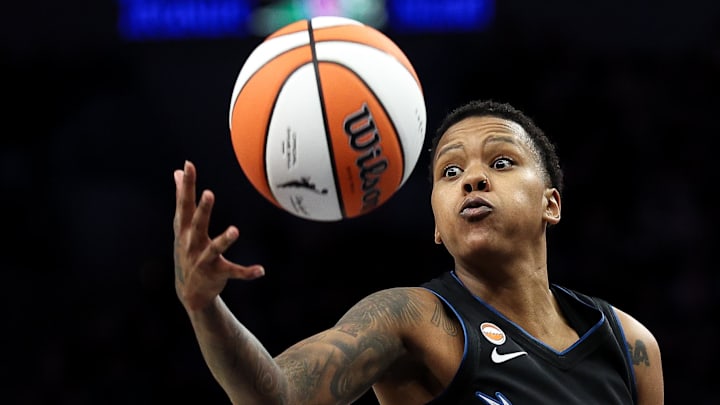
Last season conversations about fouling and foul calls dominated a lot of WNBA discourse. Players and coaches complained; Minnesota Lynx head coach Cheryl Reese was memorably ejected following an outburst during the team's playoffs run. The WNBA attempted to mitigate the problem by putting together a fouling task force during the offseason; while the players were busy negotiating terms of a new CBA, the task force was busy working on fouls.
The result is that, so far, refs are calling fouls more closely than they did last year. That's a good thing, kind of — but it's starting to seem like they may be calling fouls a little too closely.
Front Office Sports reported this week that Reeve, who is a member of the task force, is now concerned about the direction that calls are moving in. Reeve pointed out that the conversations between refs and the task force were largely about "unnecessary physicality" — not marginal fouls, which she said they "never brought up."
The answer to this ongoing problem is probably time: refs will make the calls they make and receive the feedback they receive, and will make adjustments to how they call games as it's appropriate to do so. Players and coaches will undoubtedly continue to have responses to those fouls that at times may seem outsized or dramatic, but to a degree, that's part of the game. (Also, as the people who are actually on the court during a game, it's fair that they may have the strongest opinions about how games are called).
Reeve isn't the only person who has continued to express concerns about fouling in the league. The Indiana Fever's head coach Stephanie White emphasized that consistency is necessary if calls are going to feel equitable across the league. Refs need a formula for how they call and why, and that needs to be the same no matter what teams are playing or what city they're playing a game in.
Making sure calls are consistent may prove to be a challenge — but it also may not. Unlike some elements of the WNBA, the referees who make the calls are a bit of a mystery, and much isn't publicly shared about who they are, how they're trained, why they've gotten the job, and waht changes they're making. To a large degree, fans of the league operate on faith that things will be figured out, but players and coaches don't have the same luxury.
 Add us as a preferred source on Google