

One of the harsh realities of being a WNBA player is that often, your place in the league is not safe. Only the biggest stars are truly safe from being cut in training camp or throughout the season. Even Odyssey Sims, a former All-Star, lost her roster spot with the Sparks and had to join the Fever on a hardship contract. She delivered some outstanding playoff performances for a Fever team that had lost most of its key players, proving that she deserved a roster spot.
The problem is that WNBA teams can carry only 12 players—in some situations related to salary cap issues, only 11. Players have been vocal about wanting to change that and expand roster sizes. The league opted for league expansion before allowing roster expansion, adding the Valkyries, Tempo, and Fire as well as three other teams that will follow in the next few years. While that will add roster spots, it does not solve some of the biggest issues that come with limited roster sizes.
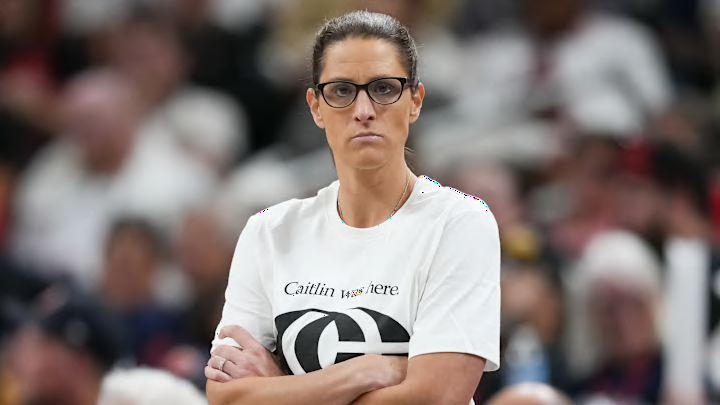
When Fever head coach Stephanie White appeared on Sue Bird’s podcast Bird’s Eye View, she addressed the issue.
“As coaches and as former players, I want to see roster expansion,” White said. “I want to see us be able to really have the opportunity to develop young players and young talent. There are a lot of players who have the potential to play in our league that just don’t have opportunity because there’s not enough spots, and because when you’re holding an eleven- or twelve-man roster, you gotta have players who can impact right away. We’ve seen it from an injury standpoint. We’ve had to go the hardship route a number of times. If you have more roster spots, then they’re in your system every day, they’re working in your system and developing every single day, and then they’re ready when their number is called.”
The Fever had to rely on hardship contracts to get through the season
The Fever’s 2025 season was plagued by injuries. Caitlin Clark missed time early on and was eventually ruled out for the season. The Fever added Aari McDonald to fill the void. She turned out to be a great fit for the Fever, but also suffered a season-ending injury in the same game that saw backup guard Sydney Colson go down with a season-ending injury. Then, the Fever also lost Sophie Cunningham and Chloe Bibby, who had also joined the team on a hardship contract at first, for the rest of the season.
As injuries piled up, the Fever added Odyssey Sims, Shey Peddy, and Ariel Powers. All of them are WNBA veterans, but it was still difficult to ask them to fill a big role in a system they weren’t familiar with right away. Sims, for example, had to step in as the Fever’s starting point guard—a tall task for someone who had just come to Indiana on short notice.
Adding roster spots would solve a lot of problems for WNBA teams
Adding even just one or two roster spots would make dealing with injuries much easier. Teams would be able to carry additional players who are a part of the team and know the system from practicing and working with the other players on the roster day in and day out. That would make it much easier for them to step into a bigger role when injuries or absences demand it.
The NBA already has a system like that in place. While only twelve players can be active for a game, teams can carry fifteen players and can hand out two-way contracts. The latter wouldn’t be an option in the W since there is no G League, but having additional players that can be activated to play when needed would be a realistic adjustment.
Adding a few roster spots for each team would also create more opportunities for young players. As White said, competitive teams have little space for young players who need some time to develop. They need veteran rosters, so that they can trust that whoever is on the bench is ready to contribute and fill a role right away. Only rebuilding teams can afford to have several young players and give them the time they need to develop. With additional roster spots, coaches might be more inclined to keep young players around and develop them within the system because a handful of injuries wouldn’t immediately force them into a big role.
 Add us as a preferred source on Google