

NIL completely revamped the college sports landscape. In women’s college basketball, the conversation is often focused on how NIL has changed recruiting, the transfer portal, and the incentives for players to stay in college as long as possible. It has also changed players’ abilities to help their communities, and that isn’t talked about enough, according to ESPN’S Holly Rowe.
“This whole NIL conversation, I think we looked at it as a lens of it’s a negative thing,” Rowe said in a recent interview with WNST. “And I think what we’re learning is these young people are doing a lot with their NIL money and doing good with it. They’re not just buying a car or a house or whatever. They may be doing some of those things, but what they’re doing is putting that money back in the community. And I think it’s been really positive. I don’t think we’re talking about it enough.”
A commitment to communities, social causes, and advocating for those in need has been a long-standing tradition in the WNBA. In 2016, players protested police brutality against Black men and women with warm-up shirts that initially earned them a fine. Four years later, the Atlanta Dream made sure that co-owner Kelly Loeffler wouldn’t serve as a senator anymore after she openly criticized the Black Lives Matter movement.
More recently, Breanna Stewart and Natasha Cloud held signs that read “Abolish ICE” during their Unrivaled introductions, and Paige Bueckers donated her earnings from the Unrivaled Free Throw Challenge to the Hopkins Strong Relief Fund in her hometown, which primarily aids immigrant families in need.
College players’ commitment to helping their communities with their NIL earnings is preparing them to carry on the WNBA’s long-standing tradition of activism.
Several college players are pouring their NIL money into good causes
Almost all of the biggest stars in women’s college basketball use their NIL money for good causes.
Iowa State star Audi Crooks launched a program meant to battle food insecurity in November when many families were struggling especially due SNAP delays caused by the government shutdown.
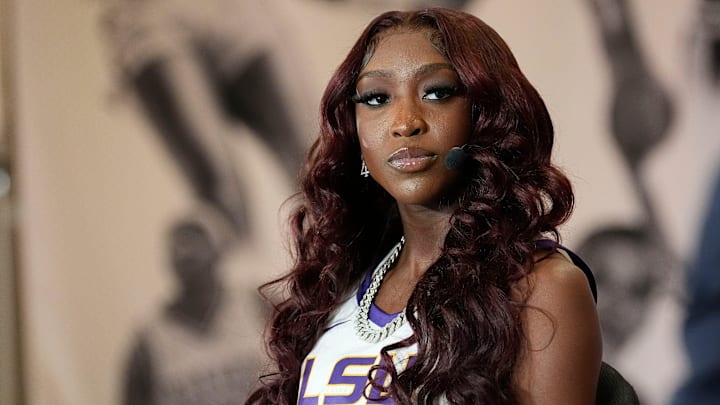
LSU star Flau’jae Johnson also has her own foundation—More to 4–which helps single mothers and underserved families in Savannah, Georgia.
UConn’s Azzi Fudd regularly hosts basketball camps and donates the benefits to the Abigail Zittoun Family Foundation, which offers financial support to families with children who are battling serious illnesses.
Hannah Hidalgo, who stars at Notre Dame, also has her own foundation, Hannah’s Helping Hands, which serves the community in South Bend.
Those four are far from the only players giving back to their communities.
 Add us as a preferred source on Google