

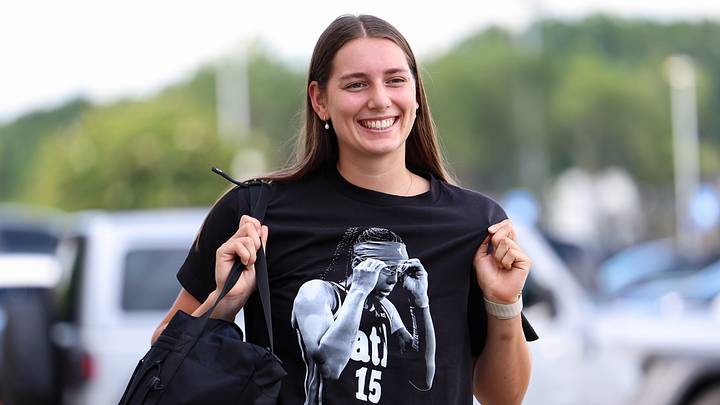
Isobel Borlase came to the Atlanta Dream off her best WNBL season. She had just been named MVP after averaging over 22 points per game for the Bendigo Spirit. Nevertheless, coming to the WNBA as a rookie was an adjustment. She was away from home for months, living in a strange city, playing in a completely new system with unfamiliar teammates, and going up against the best players in the world.
“I probably got nervous every time I checked into every single game,” Borlase admitted on the WNBL’s The Loop.
Dream fans could watch Borlase get more comfortable and confident with every game, especially after the FIBA World Cup and her stint with the Australian national team. By the time the finals came around, she was able to score in double digits twice on the WNBA’s biggest stage.
The Dream may have lost, but the experience of playing in the finals will only make them better. That includes Borlase. After a full regular season and a deep playoff run, there’s no doubt that Borlase belongs in the WNBA. Being away from home for so long will still be a challenge for the 22-year-old next season, but she should be much more comfortable and confident on the court. While the nerves of living her basketball dreams may not go away completely, Borlase will return to Atlanta knowing that she can play at this level and feeling more comfortable around her teammates.
Atlanta needs her to return ready for a better second season.
Isobel Borlase’s improvement will help the Dream chase another finals appearance
The Dream’s roster might not undergo a ton of changes this offseason. If DeWanna Bonner retires, the Dream will have to replace her. But besides her, their top nine players are all under contract. Unless they trade Brionna Jones and fully lean into the Naz Hillmon-Angel Reese starting frontcourt that got them all the way to Game 7 of the finals, the Dream will have little cap space to improve the bench and depth.
So, Borlase, Madina Okot, Te-Hina Paopao, and their offseason improvements will be key to the Dream taking another step forward as a team.
If Borlase can be a consistently confident and aggressive scorer off the bench for an entire regular season and another deep playoff run, the Dream will be even more dangerous than they were this year. It might even convince Karl Smesko to ease Rhyne Howard’s and Allisha Gray’s minute load in some regular-season matchups. They led the WNBA in total regular-season minutes with 1472 and 1434, respectively. Howard also played for Team USA in the FIBA World Cup.
If Borlase is ready for big regular-season minutes right away, Howard and Gray might not be quite as gassed toward the end of a deep playoff run as they seemed this year.
 Add us as a preferred source on Google