

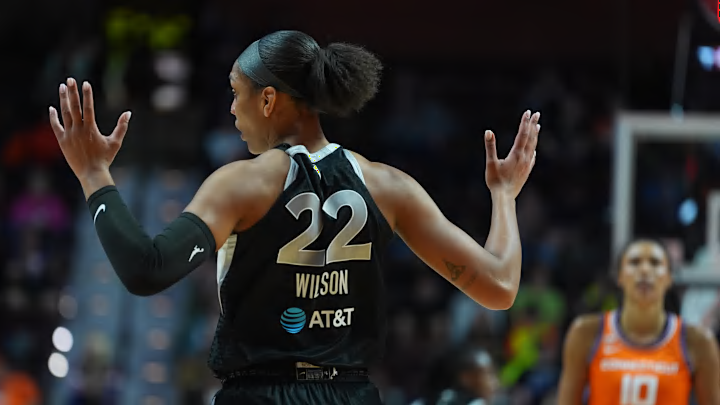
The WNBA season is still very young, but there's one thing that nearly everyone has noticed: there are way more fouls being called this season, especially when compared to last year. That's the result of a task force that was put together during the offseason to address complaints about fouls and calls that dominated much of the discourse last season. While the players were hammering out details of a new Collective Bargaining Agreement (CBA) with the league, coaches and other league officials were putting together a plan to address fouling.
The problem is that so far, that new plan is attracting complaints of another kind: it almost seems like too many calls are being made. But that's an indication that the plan is working, WNBA head of league operations Bethany Donaphin, NBA senior vice president and head of referee development and training Monty McCutchen and WNBA head of referee development and performance Sue Blauch told Sports Illustrated in an interview that was published Thursday, May 14.
McCutchen pointed out that the style of play that drew so much criticism last season had been allowed to grow and develop over a four-year period, which means that now there will be an adjustment period as teams and referees get used to the new guidelines. McCutchen added that receiving feedback publicly about the new guidelines isn't really a surprise, as everyone directly involved (the teams and staff) and indirectly involved (fans) are seeing the process unfold in real time.
The enormous and, frankly, extraordinary period of growth the WNBA has been experiencing since 2024 has resulted in these new rules, the outlet also noted. One of the biggest changes for the 2026 season impacts player freedom of movement — on both offense and defense. The new rules are meant to limit the physicality we all saw last year, but are exactly what's resulted in most of the complaints the league and referees have received so far.
Finding the right balance will be an ongoing process. Everyone involved wants the game to be dynamic and fun, but they also want the game to be safe. Some players and coaches, including the Liberty's Breanna Stewart and the Indiana Fever's Stephanie White, have commented that the new rules impacts the flow of the game, which is understandable.
Ultimately, how fouls are called and why will continue to be a big part of this season, and likely of seasons to come. The process of solving all the related issues will take time — but hopefully, not too much of it.
 Add us as a preferred source on Google