

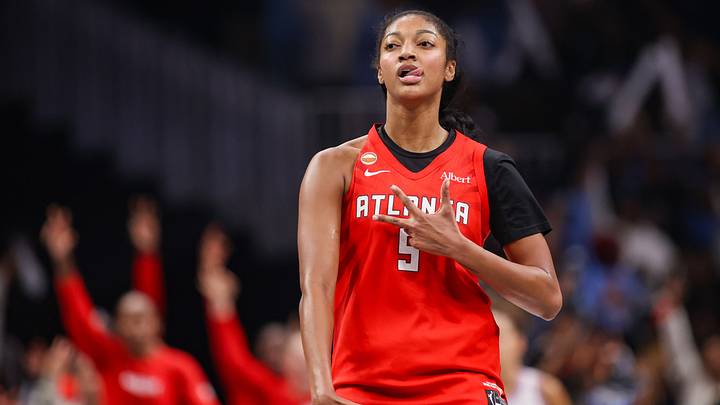
The new CBA lets players who were named MVP or made an All-WNBA team while on their rookie deals renegotiate the final year of their contract and even sign a multi-year extension. Aliyah Boston became the first player to benefit from this new rule, signing a four-year, $6.3 million extension with the Indiana Fever. Angel Reese was named to the All-WNBA Second Team this year and is now eligible for her own EPIC extension—if she takes it.
The WNBPA fought hard for the right to renegotiate contracts early if players outperform them. Reese earned this opportunity. But if she takes the pay raise immediately, it will complicate things for the Atlanta Dream, filling up their cap space and limiting their options to improve the supporting cast around their core.
Reese deserves to negotiate a new contract and get a salary that better represents her value in the WNBA. There’s no doubt about that. But she doesn’t have to. Reese is one of the most marketable players in the W. She has a signature shoe with Reebok and many other brand and endorsement deals. She could afford to decline a big pay raise if it means the Dream have a better chance to improve the roster on the margins and get back to the finals.
Whatever Reese decides to do could heavily influence the Dream’s offseason approach.
The Dream have a strong foundation in place
Reese, Allisha Gray, Rhyne Howard, Jordin Canada, Naz Hillmon, Brionna Jones, Madina Okot, Te-Hina Paopao, and Isobel Borlase are all under contract for next season. That’s the entire starting five from their finals run, three young reserves who can still get better, especially Okot and Borlase, who have shown great promise, and another veteran All-Star.
DeWanna Bonner is the team’s only key free agent. She might retire, or she might want another shot at a championship. Either way, the Dream have a core that could get them back to the finals.
But the depth concerns remain. Even if Borlase and Okot come back much better next season, the Dream don’t have a great backup for Jordin Canada or enough wing depth.
They can either try to fill those needs with minimum players, or they can trade Brionna Jones, moving her $1 million salary and creating cap space to add better role players.
The latter option becomes more realistic if Reese negotiates an expensive extension. After all, the Dream didn’t need Jones, who missed basically the entire season with a knee injury, to compete for a title. Moving her would allow them to play the same style that benefited so greatly from Reese’s versatility, speed, and athleticism AND improve the roster around the core five from this year’s finals run.
 Add us as a preferred source on Google