

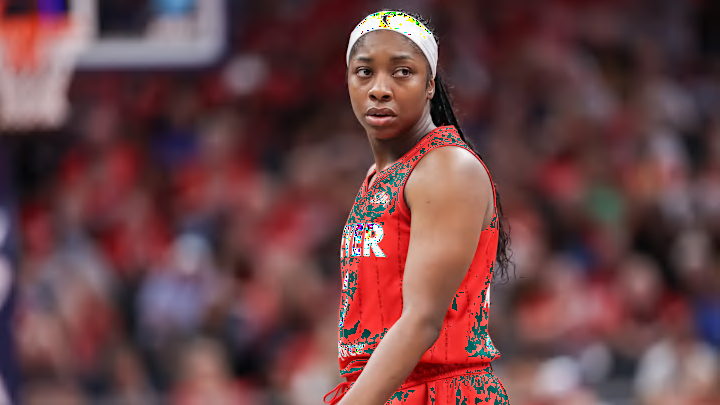
The WNBA and the Players’ Association are still locked into the most important CBA negotiations in league history. Players finally have the leverage to negotiate higher salaries and the best possible working conditions. While conversations are happening, it seems that the two parties are still rather far away from agreeing on a new deal.
While there has been movement when it comes to salaries and revenue shares, other issues are still concerning. For example, the WNBA reportedly proposed an earlier start to the season that would conflict with the NCAA and a mandatory draft combine, and removed team housing from its latest proposal. The latter makes one thing abundantly clear: if the WNBA has to pay players higher salaries, it wants to save money in other areas.
Since 2016, players have had the choice to stay in team-provided housing or receive a stipend to help pay for their own housing. If salaries really skyrocket to range from about $200,000 to over one million per season, most players won’t need help with housing anymore.
However, getting rid of team housing would hurt groups of players that are already vulnerable: rookies on low-paying non-guaranteed contracts, who don’t even know if they will make a roster in the city they were drafted to, veteran players on non-guaranteed contracts, and hardship players. In the 2025 season, for example, Aari McDonald, Odyssey Sims, Chloe Bibby, Julie Vanloo, Bree Hall, Haley Jones, and Kaila Charles were all waived and played for more than one team—a common occurrence in the W, no matter a player’s talent.
Team housing makes life easier for many players
Even with higher salaries, finding a place to live will be very challenging for some players. Stars and established veterans on well-paying guaranteed contracts won’t have many problems, even in some of the more expensive cities, like New York or Los Angeles. Sabrina Ionescu, for example, doesn’t have to worry about being waived by the Liberty and having to chase opportunities in other cities while being stuck with an apartment lease in New York.
For players on temporary or non-guaranteed contracts, things look quite different. They will struggle to find suitable and affordable accommodations, especially if they have to do it on short notice. In big cities, good apartments aren’t only expensive, they are also often hard to come by due to the high demand.
Unless the new CBA includes additional roster spots that would make hardship contracts obsolete, some players will have to continue moving across the country on short notice. Without team housing, they would have to stay at hotels and, if their hardship contract is converted to a rest-of-season contract, find long-term housing in the middle of a busy season while also figuring out how to get out of a rental agreement in the last city they played in. The same goes for players on non-guaranteed contracts, who get waived halfway through the season and lose out on their salary while still being stuck in a rental agreement.
Moreover, many players only spend the WNBA season in the city in which their current team is located. Especially international players would struggle to secure housing when there often isn’t much time between the end of their season in another league and the start of the WNBA season, and they constantly move teams from season to season.
 Add us as a preferred source on Google