

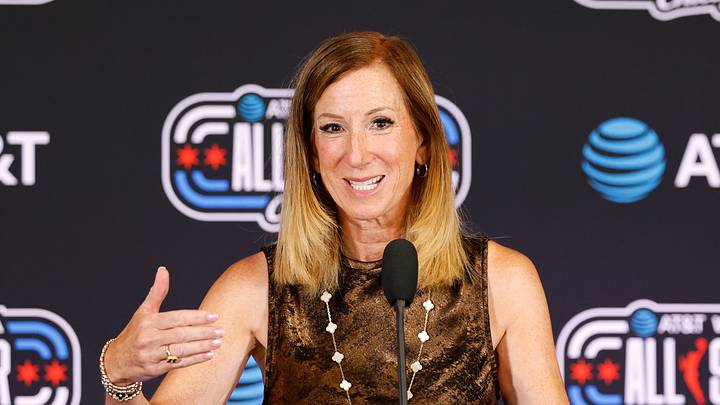
WNBA Commissioner Cathy Engelbert is on her way out of the role she's occupied since 2019. Engelbert's career as Commissioner has been full of highs and lows, and no one can argue that she's done anything but navigate the league through what may well be its most formidable and exceptional period of growth to date.
Engelbert addressed the media before the first game of the WNBA Finals. She touched on a few different topics, and who might replace her as WNBA Commissioner was clearly top of mind.
Engelbert told reporters she's met with a search firm that's facilitating the process of finding the right candidate. She also revealed that she and several others put names into the hat. Engelbert then elaborated on what qualities the next WNBA Commissioner will need to have, and pinpointed one that is more important than the rest: the ability to believe the changes in the WNBA are permanent.
The league has millions of people watching each game; players are being paid millions of dollars. There are endorsement deals, opportunities for growth, and someone with something to say around every corner. Engelbert knows this better than most. Though she's often been on the receiving end of a lot of criticism (which pretty much comes with the territory of leading anything), she's remained focused on her mission: growing the WNBA.
The position of Commissioner is "multi-dimensional," she said. Whoever takes over after her will need "thick skin." She then said that, perhaps most importantly, "you have to have confidence that we can continue this growth trajectory and confidence and building relationships with players and agents and the Board of Governors, the owners, and the stakeholders."
The ability to believe that something like enormous growth will continue is something that can't really be taught. Sure, there's plenty of proof right now that the WNBA will maintain the success the league has earned, but there's also the quiet possibility that it might not. Whoever takes over will have to both have the ability to believe in the league and to guide others toward that same end. They'll need to balance hope and shrewd planning, and they'll need a keen eye for seeing the final product before it's even close to being achieved.
That's a creative skill set that will need to be matched by their potential as a leader and a communicator, and as the type of person who can balance player relationships with the inner workings of the WNBA. That's a tall order, but... surely, there's someone out there who can do it.
 Add us as a preferred source on Google