

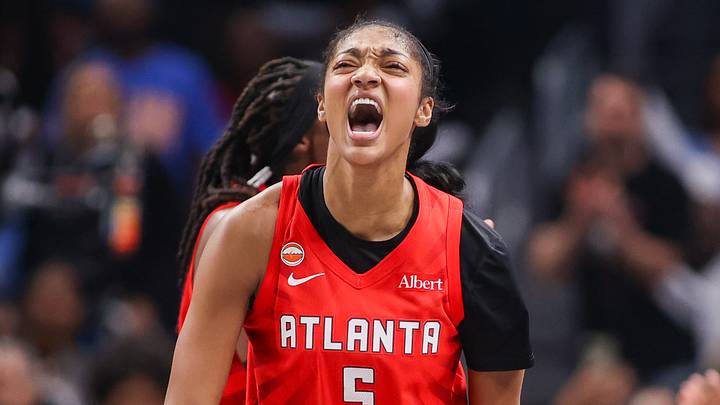
We have a Game 7. The Atlanta Dream's devastating first-half performance all but confirmed a pivotal victory over the Golden State Valkyries. Offensively, the Dream were unstoppable. While everyone contributed to the win, Angel Reese's playmaking fueled a near-perfect 3-point shooting night for the home team. However, the second half showed that if the Atlanta superstar steps away from facilitating, her teammates aren't as clinical.
Reese was the foundation for a sublime first-half showing
Many questioned the early start time for Game 6, but it didn't bother the Atlanta Dream one bit. The crowd created an electric atmosphere that the players mirrored on the court. From the opening tip, the Dream were relentless, aggressive, and clinical. A storming first-half performance proved too much for the Valkyries to climb back from, and without Angel Reese's change of emphasis, none of it would have been possible.
Despite putting herself in pole position for Finals MVP with a scintillating opening three games to the series, Reese's offensive brilliance cooled through games 4 and 5. Karl Smesko had to make an adjustment to bring out the best in his star; putting her in a playmaking role benefited every player, not just Reese.
Kiah Stokes has been Angel's Kryptonite throughout the Finals, swatting away the 24-year-old's layup attempts at any given opportunity. In the first half of Game 6, Reese tried something different. She stayed aggressive, driving into the paint and drawing lots of attention. Once the defender closed her down, she kicked the ball out to an open teammate, allowing them to drain an uncontested shot from deep.
The LSU racked up 5 first-half assists, which accounted for 13 of Atlanta's 46 points. Rhyne Howard and Allisha Gray had their finest showings of the Finals; Reese provided a perfect platform for the stars to find their rhythm. For some reason, this approach changed at the break.
A change of emphasis nearly crushed Atlanta's championship dream
Despite being 46-26 down at the break, the Valkyries ignited a second-half comeback that nearly clinched a historic championship and devastated a packed-out State Farm Arena. Atlanta may have won the game by 11 points (80-69), but the game could have ended very differently if Golden State had been more clinical from 3-point range.
Golden State outscored their opponents by 9 points in the final two quarters of play, and it is no coincidence that during this time, Reese added only one assist to her tally. Reese attempted 10 of her 18 shots in the second half, significantly reducing the number of times she fed the ball to an open teammate beyond the arc.
Given her success in the earlier Finals games in the scoring column, it is easy to see why Reese wanted to contribute to scoring, but it didn't help her team's chances. Atlanta was most effective when they kept the ball moving, and Angel assumed the role of the Dream's primary playmaker.
Changing a winning formula is never a recipe for success. Angel Reese proved that when she keeps the ball moving, her team becomes much more difficult to contain. If her playmaking becomes a more consistent feature in Game 7, the Dream will be too much for the Valkyries to handle.
 Add us as a preferred source on Google